
If you are considering replacing a missing tooth, one of your first questions is probably, “How much do dental implants cost in San Diego?”
It is an understandable question. Dental implants are often considered one of the most durable and natural-looking ways to replace missing teeth, but the total investment can vary significantly from one patient to another. Online estimates may provide broad price ranges, yet they rarely explain what is included, what may cost extra, or why two patients can receive very different treatment plans.
The reality is that there is no single universal price for a dental implant. Your total cost depends on the number of teeth being replaced, the condition of your gums and jawbone, the type of restoration needed, the materials selected, and whether any additional procedures must be completed before implant placement.
At Scripps West Dental, we believe San Diego patients deserve a clear explanation of their options before making a decision. This guide will help you understand the typical components of implant treatment, the factors that influence the final price, and the questions you should ask when comparing estimates.
What Is a Dental Implant?
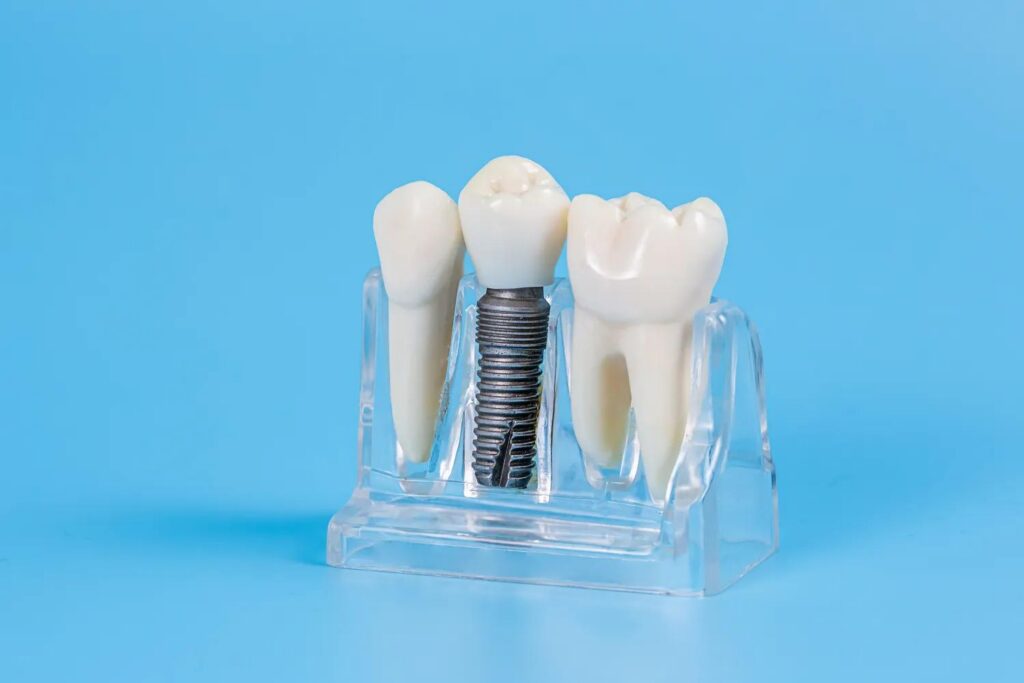
A dental implant is a small post, usually made from titanium, that is surgically placed into the jawbone. It serves as an artificial tooth root. After the implant has integrated with the surrounding bone, it can support a dental crown, bridge, or full-arch restoration.
A complete single-tooth implant generally has three primary parts:
- The implant post placed in the jawbone
- The abutment that connects the implant to the restoration
- The custom dental crown that replaces the visible tooth
This distinction matters when researching the dental implants cost San Diego patients may encounter. Some advertised prices refer only to the implant post and do not include the abutment, crown, imaging, sedation, extraction, or other necessary services.
Before comparing prices, ask whether the estimate represents the complete treatment or just one part of it.
What Is the Average Dental Implant Cost in San Diego?
The cost of replacing one tooth with a dental implant in San Diego can commonly total several thousand dollars. However, it is difficult to provide an accurate figure without first evaluating your mouth, bone structure, medical history, and restorative needs.
A straightforward case involving one missing tooth, adequate bone, healthy gums, and no need for an extraction will usually cost less than a case requiring bone grafting, periodontal treatment, or a more complex restoration.
The price may also change when several teeth are being replaced. For example, replacing three missing teeth does not always require three individual implants. In some cases, two implants can support a bridge that replaces multiple teeth. Patients who have lost most or all of their teeth may be candidates for an implant-supported denture or a fixed full-arch restoration.
This is why generalized online prices can be misleading. The most meaningful estimate is one based on a complete examination and a treatment plan designed specifically for you.
What Is Included in the Cost of a Dental Implant?
When evaluating the dental implants price Mira Mesa patients are quoted, it helps to know which services may be included. A comprehensive implant treatment plan can involve several stages.
Your initial evaluation may include a dental examination, digital X-rays, three-dimensional imaging, photographs, and an assessment of your gums and bite. These records help determine whether there is enough bone to support an implant and allow the dentist to identify nearby nerves, sinuses, and anatomical structures.
The surgical phase includes placement of the implant into the jaw. Depending on the case, a temporary tooth or temporary restoration may also be provided during healing.
After the implant has integrated with the bone, an abutment is attached. Impressions or digital scans are then used to design the final crown, bridge, or implant-supported prosthesis.
Your total investment may therefore include:
• Diagnostic imaging and treatment planning
• Tooth extraction, when necessary
• Bone grafting or other preparatory procedures
• Implant placement
• The implant post and abutment
• A temporary restoration
• The final crown, bridge, or full-arch restoration
• Follow-up visits during healing
Not every patient needs every service. A personalized consultation is necessary to determine which steps apply to your situation.
The Number of Missing Teeth Affects the Price
The number of teeth being replaced is one of the biggest factors affecting the total cost of implant treatment.
A single missing tooth may be replaced with one implant and one crown. When several adjacent teeth are missing, an implant-supported bridge may be recommended. This approach can replace multiple teeth without placing an implant for every missing tooth.
Patients who are missing an entire row of teeth may need a removable implant-supported denture or a fixed full-arch restoration. These treatments use several carefully positioned implants to support a larger prosthesis.
Although full-arch treatment has a higher total price than a single implant, the cost per tooth may be lower because a limited number of implants can support many replacement teeth.
The appropriate design depends on your oral health, bone availability, bite, personal preferences, and budget.
Bone Grafting Can Change the Total Cost
Dental implants need adequate bone for support. After a tooth is lost, the jawbone in that area begins to shrink because it is no longer stimulated by the tooth root.
If significant bone loss has occurred, a bone graft may be recommended before or during implant placement. Grafting material is used to rebuild or preserve the ridge so the implant has a stable foundation.
The complexity of grafting can vary. A small graft placed at the time of extraction is different from a larger procedure needed to rebuild an area that has been missing teeth for years.
For implants in the upper back portion of the mouth, a sinus lift may occasionally be necessary. This procedure increases the amount of bone available beneath the sinus cavity.
Bone grafting adds to the cost and treatment timeline, but it may be essential for creating a predictable and lasting result.
Tooth Extractions May Be Part of Treatment
Some patients still have a damaged or failing tooth in the area where the implant will be placed. That tooth may need to be removed before implant treatment can proceed.
In straightforward cases, the extraction and implant may be completed during the same appointment. In other situations, the area needs time to heal before the implant can be placed.
The condition of the tooth, presence of infection, root shape, surrounding bone, and location in the mouth all influence the complexity of the extraction.
When asking how much are dental implants CA patients should consider whether extraction costs are included in the proposed treatment plan. A low advertised implant price may not account for removal of the existing tooth.
Gum Health Matters
Healthy gums are an important part of successful implant treatment. Active gum disease can damage the tissues and bone that support both natural teeth and dental implants.
If you have inflammation, bleeding gums, deep periodontal pockets, or significant tartar accumulation, periodontal treatment may be recommended before implant placement.
This does not necessarily mean that you cannot receive an implant. It means the infection must be controlled so the implant can be placed in a healthier environment.
The cost of gum treatment depends on the type and severity of the disease. Maintaining good periodontal health after treatment is equally important because implants can develop inflammation and bone loss if plaque is allowed to accumulate around them.
The Type of Final Restoration Influences Cost
The implant itself is only one part of the completed tooth replacement. The restoration attached to the implant also affects the final price.
For one missing tooth, the restoration is generally a custom implant crown. For multiple teeth, it may be an implant-supported bridge. Patients replacing a full arch may choose between a removable prosthesis and a fixed restoration that remains attached to the implants.
Materials also matter. Dental restorations may be fabricated from zirconia, porcelain, acrylic, metal-supported ceramics, or a combination of materials. Each option has its own advantages related to strength, appearance, repairability, weight, and cost.
The best material is not automatically the most expensive one. It should be selected according to the location of the restoration, the forces created by your bite, your esthetic goals, and the number of teeth being replaced.
Experience, Planning, and Technology Affect the Price
Implant treatment involves both surgical and restorative dentistry. Precise planning is essential because the implant must be positioned to support a functional and natural-looking final tooth.
Three-dimensional imaging can help the dentist assess bone width, bone height, sinus anatomy, nerve location, and implant positioning. Digital scans may also be used to design restorations and improve coordination between the surgical and restorative stages.
Some cases may benefit from computer-guided implant placement. A custom surgical guide can help transfer the digital plan to the mouth during treatment.
When comparing implant estimates, patients sometimes focus only on the price of the hardware. However, the planning, clinical judgment, technology, laboratory work, follow-up care, and management of potential complications are also important parts of the treatment.
Dental implants are a long-term investment. Choosing care based entirely on the lowest advertised price may not provide the value, support, or predictability you expect.
Why Advertised Implant Prices Can Be Confusing
You may see advertisements promoting dental implants at prices that appear dramatically lower than other estimates. These offers are not necessarily inaccurate, but they may refer to only one portion of treatment.
For example, an advertised price may include the implant post but exclude the abutment and crown. It may not include imaging, extractions, bone grafting, sedation, temporary teeth, or follow-up visits.
Some promotions may also apply only to patients who meet very specific clinical requirements.
When reviewing an advertisement, ask the following questions:
• Does the price include the implant, abutment, and final crown?
• Are diagnostic images and planning included?
• Are extractions or bone grafting additional?
• Is a temporary tooth included?
• Who will provide follow-up care if a problem develops?
• What type of restoration and materials are being used?
A detailed written estimate is more useful than a single promotional number.
Does Dental Insurance Cover Dental Implants?
Dental insurance coverage for implants varies by plan. Some policies provide partial benefits for the crown or prosthetic portion of treatment but offer limited or no coverage for the surgical placement of the implant.
Other plans classify implants as a covered major service, subject to deductibles, waiting periods, annual maximums, missing-tooth clauses, or frequency limitations.
Even when implant treatment is covered, the annual maximum may be significantly lower than the total treatment cost. This means insurance may help reduce the expense without paying for the entire procedure.
Your medical insurance may occasionally contribute when tooth loss or reconstruction is connected to trauma, certain medical conditions, or reconstructive surgery. Coverage is highly case-specific and should be verified before treatment.
At Scripps West Dental, our team can help you understand the dental benefits available under your plan. However, the final benefit decision is made by the insurance company.
Financing Can Make Implant Care More Manageable
The total dental implants cost San Diego patients face does not always need to be paid all at once. Implant care typically occurs in stages, and payments may be divided according to the treatment timeline.
Third-party financing may also allow qualified patients to spread the cost over monthly payments. Flexible spending accounts and health savings accounts can often be used for eligible implant treatment as well.
When considering financing, review the interest rate, repayment period, minimum payment, and any promotional terms. A payment plan should fit comfortably into your broader financial situation.
It is also important to compare long-term value rather than focusing only on the initial expense. A lower-cost treatment that requires frequent replacement, adjustment, or repair may become more expensive over time.
Are Dental Implants Worth the Investment?
For many patients, dental implants provide advantages that make them a worthwhile long-term investment.
Because an implant is anchored in the jawbone, it can offer excellent stability during eating and speaking. A single implant can replace a missing tooth without requiring the adjacent teeth to be reshaped for a traditional bridge.
Implants also stimulate the surrounding bone in a way that removable tooth replacements do not. This can help preserve the jawbone in the area of the missing tooth.
From an esthetic perspective, an implant-supported crown can be designed to blend with the surrounding teeth. The result should complement your smile while also restoring function.
Implants still require care. They must be brushed, cleaned around thoroughly, and evaluated during regular dental visits. Patients who smoke, grind their teeth, have uncontrolled diabetes, or struggle with oral hygiene may face a greater risk of complications.
No tooth replacement lasts forever without maintenance, but well-planned and properly cared-for implants can provide many years of service.
Dental Implants Versus Bridges and Dentures
Dental implants are not the only option for replacing missing teeth. A traditional dental bridge, partial denture, or complete denture may be appropriate depending on your health, goals, anatomy, and budget.
A bridge can replace one or more teeth and may be completed more quickly than implant treatment. However, the teeth next to the open space usually need to be reshaped to support it.
A removable denture typically has a lower initial cost and can replace many teeth at once. However, it may move during eating or speaking and may need periodic adjustment as the jaw changes over time.
Implants often require a larger upfront investment and a longer healing period. In exchange, they may provide greater stability, preserve adjacent tooth structure, and offer a result that feels more like natural teeth.
The right choice is based on more than price. It should account for comfort, function, maintenance, longevity, oral health, and personal priorities.
How Long Does Dental Implant Treatment Take?
Treatment time varies according to the complexity of the case.
A patient with adequate bone and no active infection may be able to have the implant placed soon after the initial evaluation. The implant is then allowed to integrate with the bone, a process that can take several months.
Patients who need an extraction, bone graft, or periodontal treatment may require additional healing time before the final restoration can be completed.
In selected cases, a temporary tooth can be placed soon after implant surgery. However, immediate temporary teeth are not appropriate for every patient or every location in the mouth.
A longer treatment timeline is not necessarily a disadvantage. Proper healing and careful staging can help create a stronger foundation for the final result.
Why an In-Person Implant Consultation Is Important
Online articles can help you understand the general factors that influence the dental implants price Mira Mesa patients may pay, but they cannot determine your individual needs.
An implant consultation allows the dentist to examine your teeth and gums, evaluate your bite, review your health history, and assess the available bone. Imaging can reveal issues that are not visible during a routine visual examination.
After this evaluation, you should receive a treatment plan explaining:
• The number and location of implants recommended
• Whether extractions or grafting are necessary
• The type of final restoration
• The expected treatment sequence
• The estimated timeline
• The anticipated fees
• Available insurance and financing options
This is also your opportunity to ask questions and discuss any concerns about surgery, healing, appearance, comfort, or cost.
Replacing Missing Teeth at Scripps West Dental
The answer to “how much are dental implants CA patients likely to pay?” depends on the care each person actually needs. A healthy patient replacing one recently lost tooth will have a different treatment plan from someone who has experienced years of bone loss or needs to replace an entire arch.
At Scripps West Dental, our goal is to help patients understand the full picture before moving forward. We evaluate the health of the mouth, explain the available tooth replacement options, and develop a personalized plan based on function, longevity, esthetics, and financial considerations.
A transparent consultation can help you understand what is included in your estimate and why each recommended step is important. It can also help you compare implants with bridges, dentures, and other alternatives so you can make a confident decision.
If you are researching dental implants cost San Diego or dental implants price Mira Mesa, schedule a consultation with Scripps West Dental. A personalized evaluation is the most reliable way to determine your treatment options, expected timeline, and actual cost.